Cedarcroft Club – A project to establish a healthy landscape with curb appeal using New Jersey native plants, while developing a showcase for community education and access.
Download a PDF Case Study – Cedarcroft Club
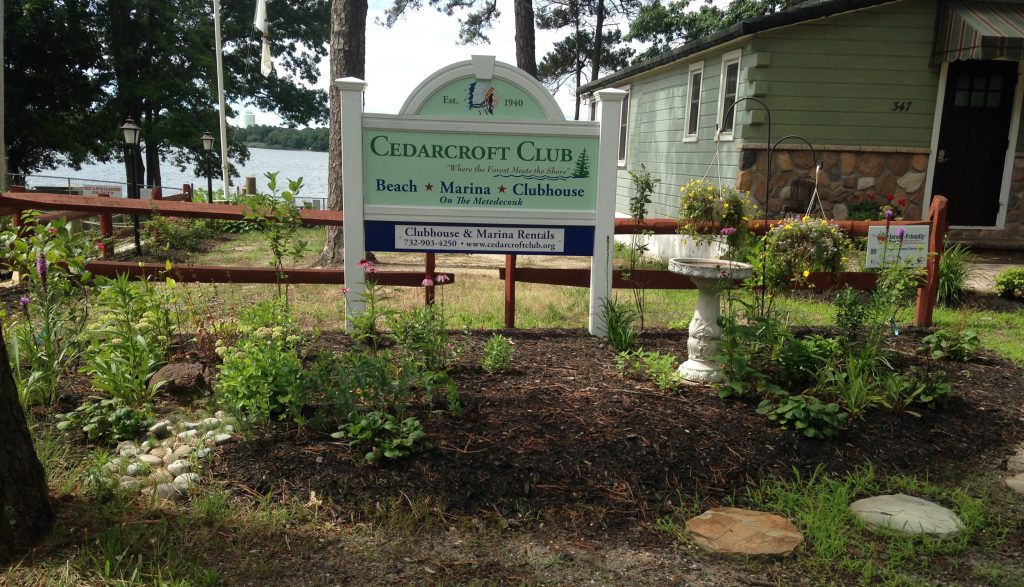
The shaded substrate around the Cedarcroft Legend Sign near the entrance to the neighborhood is sloped toward the road, the soil contains large aggregates and adequate organic matter. Both sites have fair to good drainage. Existing vegetation on both sites looks healthy. Installed irrigation is not available on either site.
Members of Cedarcroft Club made plans to establish a healthy landscape with curb appeal using New Jersey native plants, while developing a showcase garden for community education and access.
Compost was also added to the soil to provide organic matter that supports the health of the soil. Adding compost to sandy soil increases its ability to hold moisture and buffers pH.
The landscape incorporates best management practices, requiring little to no water or fertilizer, which will prevent non-point source pollution from entering stormwater runoff, which washes into the Metedeconk River, and eventually into the Barnegat Bay.
The Jersey-Friendly Yards Plant Database was utilized to identify drought-tolerant trees, shrubs and perennials that grow well in sandy, acidic soil. A variety of species were selected to provide the biodiversity needed for this complex project which best support the varied conditions and to attract wildlife.

The Cedarcroft Club native and Jersey-Friendly plant list includes:
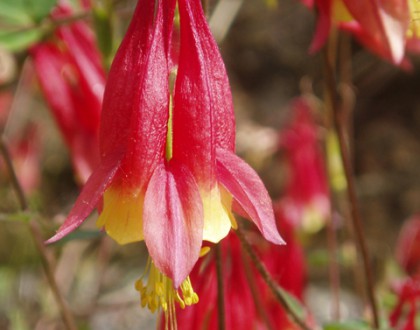
Perennials:
- Eastern Columbine (Aquilegia canadensis)
- Butterfly Weed (Ascelpias tuberosa)
- Blue Wild Indigo (Baptisia australis)
- Yellow Wild Indigo (Baptisia tinctoria)
- Purple Mistflower (Conoclinium coelestinum)
- Lanceleaf Tickseed (Coreopsis lanceolata)
- Purple Coneflower (Echinacea purpurea)
- White Wood Aster (Eurybia divaricate)
- Woodland Sunflower (Helianthus divaricatus)
- False Sunflower (Heliopsis helianthoides)
- Sedum (Hylotelephium telephium)
- Blazing Star (Liatris spicata)
- Great Blue Lobelia (Lobelia siphilitica)
- Sundial Lupine (Lupinus perennis)
- Golden Ragwort (Packera aurea)
- Foxglove Beardtongue (Penstemon digitalis)
- Seaside Goldenrod (Solidago sempervirens)
- New England Aster (Symphyotrichum novae-angliae)